Note: This guide contains affiliate links. If you purchase through our links, we may earn a commission at no extra cost to you. This helps support our testing and content creation.
Introduction
When someone asks me what the best FPV RTF kit is in 2026, I always start with the same question: "Do you actually want to fly, or do you want to build?"
If your honest answer is "I just want to fly first and worry about building later," then a ready‑to‑fly (RTF) kit is absolutely the right way to start.
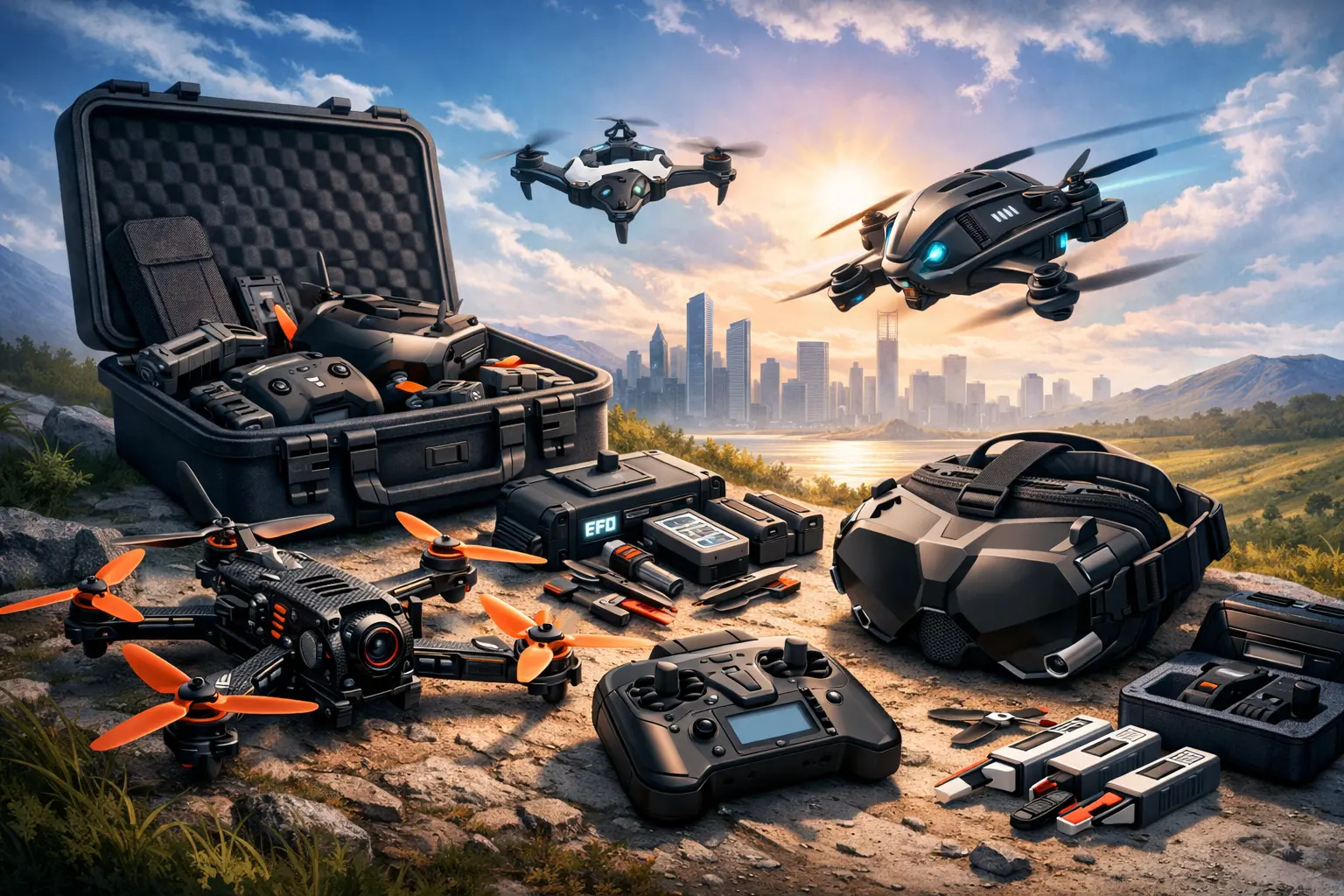
RTF means the drone, radio, and goggles all come in one box and are already bound and configured so you can be in the air within an hour of charging batteries. You don't need to solder, flash firmware, or fight with Betaflight before your first hover. I wish this was an option when I started; my first "kit" was a pile of parts and a very burnt smell from the first time I soldered a 5‑in‑1 ESC backwards.
For 90% of beginners, an FPV RTF kit is the fastest, least frustrating path to that first successful FPV flight. You get a known‑good setup, a matching radio and goggles, and you remove a dozen failure points that scare people away from the hobby.
That said, "RTF" doesn't always mean literally everything. Many kits still expect you to add extra batteries, maybe a carrying case, and ideally an FPV simulator to practice on before you start threading playground gaps. Most RTF boxes include:
- Drone (tiny whoop, micro cinewhoop, or larger quad)
- Radio transmitter
- FPV goggles
- 1–2 flight batteries and a basic charger
In this guide I'll walk you through what to look for, compare the best FPV RTF kits I've tested in 2026, and be honest about what they don't tell you upfront.
If you want to compare these to non‑RTF options later, I recommend bookmarking my guides to best beginner FPV drones and best FPV drones 2026.